
When it comes to skin conditions, particularly rosacea, it is vital to support the skin barrier to allow it to repair and strengthen. For many years after being diagnosed, I wrongly assumed that exfoliating my skin would help with the flaky, rough patches, improving the texture. Looking back, this was the worst thing I could have done, resulting in a weakened skin barrier and aggravated symptoms. Over time I tried many cleansing devices and products, which took a bit of trial and error. Nowadays, I have a daily routine in place that is well-suited to my skin. I have learnt “less is more” with products. Using many skincare products can cause accidental damage to the skin barrier, as stated in ‘What to Know About Your Skin Barrier and How to Protect It’. Therefore, finding and persevering with a few staple products, which suit your skin, go a long way to repairing a damaged skin barrier, which in turn improves the symptoms associated with rosacea.
What Is the Skin Barrier?
The skin is the largest organ, acting as a barrier between the environment and the inner working of the human body. As well as offering protection, the skin assists with immune defence, vitamin production and the regulation of body temperature. Detailed information about skin composition can be found here.
Symptoms of a Damaged Skin Barrier
Tell-tale signs of a damaged skin barrier include dry, cracked skin with a tight or burning sensation (all of which are not dissimilar from rosacea).
Causes of Skin Barrier Impairment
Causes are varied and can range from overly exposing one’s face to the sun, using products that contain allergens and irritants, or harsh mechanical products such as exfoliants. These can all negatively impact the skin barrier, causing it to be less effective and ultimately damaged. Interestingly, those suffering from rosacea are more likely to be predisposed to skin barrier damage due to the inflammatory nature of the skin condition that is already present.

How Does a Compromised Skin Barrier Impact Rosacea?
Skin irritation is associated with an increase in blood flow which leads to long-lasting redness and, in some cases, visible capillaries close to the surface of the skin. If the skin barrier is repaired and strengthened, that, in turn, results in decreased irritation and reactivity of the blood vessels, causing fewer episodes of facial flushing. To view a visual representation of how the skin barrier functions in rosacea, see this article.
Although few studies have investigated the properties of the skin barrier in rosacea sufferers, it is evident alterations in skin barrier function occur due to the inflammatory nature of the condition. ‘Skin Barrier in Rosacea’ focuses on changes seen within the skin barrier from inflammatory changes to vascular, pH and moisture levels. Additionally, factors that contribute towards rosacea are also covered. A few interesting points from the article include:
- Dry or scaly skin can be a sign of a damaged skin barrier.
- Rosacea sufferers possess an altered innate immune response (‘innate immunity’ refers to inherited as opposed to ‘adaptive’, influenced by one’s surroundings) to environmental factors, which leans towards inflammation.
- The different innate immune response evident in rosacea also involves an increased expression of the TLR2 (toll-like receptor), causing a greater expression of kallikrein 5.
- Skin barrier damage seen in rosacea is likely further exacerbated due to an increased expression of kallikrein.
- Cathelicidins fall within antimicrobial peptides, known as cationic antimicrobial peptides. Rosacea-prone skin contains an elevated concentration of cathelicidins compared to normal skin.
- More specifically, cathelicidin LL-37 plays a vital role in rosacea as there is a malfunctioning in its processing, resulting in inflammation-inducing peptide fragments released.
- Skin hydration levels tend to be low, with pH levels elevated in the central regions of the face.
- Uncomfortable sensations (stinging and burning) are caused by using products that compromise the skin barrier, such as exfoliants, tonics and soaps.
- Effective skin care products can help to restore the skin barrier, which stabilises inflammation and symptoms.
- Moisturisers that increase hydration prevent damage and removal of lipids in the upper layers of the skin.
- Repairing the skin barrier function reduces inflammation and the potential for substances that may be skin irritants, both of which improve rosacea symptoms.

How Can the Skin Barrier Be Repaired?
You may be wondering which products strengthen the skin barrier. There are products available specifically formulated to do just that. In all honesty, I have never tried products specifically designed for repairing and strengthening the skin barrier, but there is no doubt my skincare regime has helped a great deal. Over many years, my skin barrier has definitely strengthened, resulting in a remarkable decrease in diffuse redness. Reservations towards using products tailored for skin barrier repair are due to my ultra-sensitive skin, with many skin barrier repairing products containing potential irritants or allergens. I only use natural products and organic where possible. For information on products that target the skin barrier, see this article in The Editorialist.
Specific Ingredients Which Aid Barrier Repair
Given I prefer to use organic and natural products, rather than going down the conventional medicinal route, plant oils are deemed effective at strengthening the skin barrier and preventing moisture loss. Plant oils also offer anti-inflammatory, antioxidant and antibacterial properties that all aid in caring for rosacea-prone skin. Effective oils include jojoba, coconut, argan and rosehip oil. More is available here. Even more specific to skin barrier repair, ingredients that mimic the composition of the skin itself, such as Triglycerides and Ceramides, are recommended. For more information, please see this informative article by The Naked Chemist.

Personal Product Favourites for Skin Barrier Repair
Please note, this is not an #AD. All opinions are my own, with the product shown, purchased myself.
After trying a multitude of skincare products over the years, there is one product I rely on as a skincare must-have. Of course, with rosacea, one aims to reduce and conceal the redness as much as possible. However, it is equally important to focus on strengthening the skin barrier, which, in turn, decreases redness, and uncomfortable sensations and helps with any dry, scaly patches. The product in question is ‘Daily Defence Cream’ from Latvian brand ‘MADARA’ which I cannot recommend enough. Their products are natural, organic, vegan, cruelty-free and ’COSMOS Certified’ through ‘ECOCERT’. The daily defence cream is particularly effective during winter months when the air is dry, with the skin needing additional moisture and protection from the cold. The ultra-rich balm is incredibly soothing, and you get the feeling of skin protection without any greasy sensation. During the winter months, I apply it at the end of my cleansing routine, morning and night. It works well as a base for makeup as it sinks right in, so there are no white marks or streaks. I like to use any surplus on my hands: perfect during the cold months if one is prone to dry or cracked hands. In the warmer months, I use it occasionally at night when I feel as though my skin could do with some extra TLC. In addition, the packaging for this particular cream is composed of plant-based plastics and is 100% recyclable! The cream helps with skin dryness and roughness, protecting the skin from harsh weather conditions. The daily defence cream contains oils from the Northern cloudberry and sea buckthorn, infused with vitamins, helping to soothe, hydrate and repair the skin barrier. No wonder this product is one of my firm favourites! It certainly lives up to its claims of repairing the skin barrier whilst improving skin texture, comfort and moisture levels.

Ingredients Under the Spotlight
Let’s take a deeper look into the ingredients mentioned above: cloudberries and sea buckthorn. Both of these are soothing for rosacea for a variety of reasons.
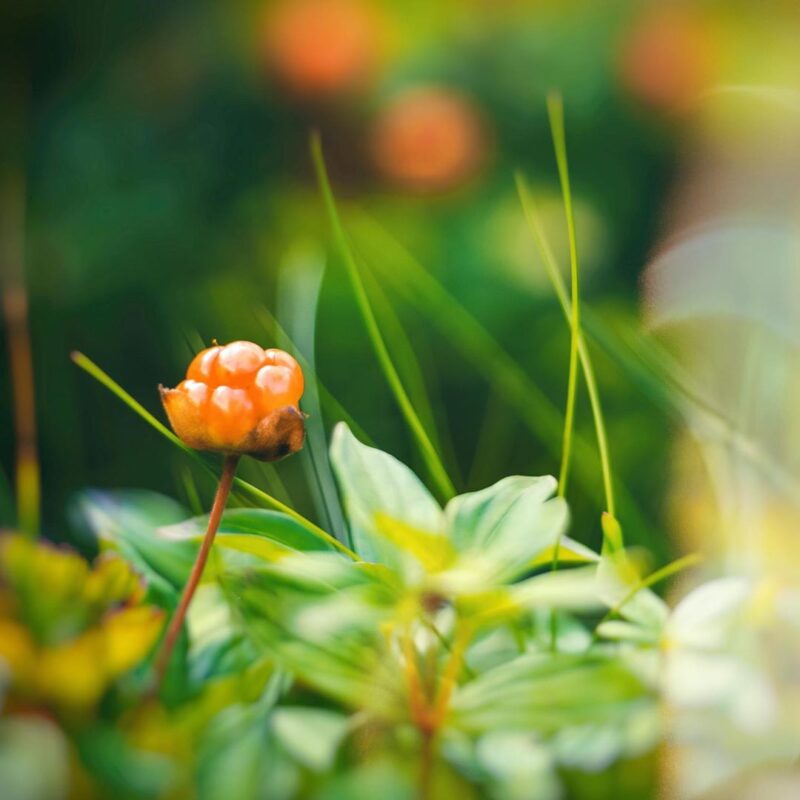
Cloudberries are native to Nordic countries and resilient against harsh environments, even during arctic winters. These fruits may be small, but they are packed full of nutrients, notably vitamin C, vitamin E, omega-3 and omega-6. The fatty acids found in cloudberry seeds help retain moisture within the skin and repair the skin barrier. Cloudberries contain antioxidants and phenols, increasingly utilised as an anti-ageing botanical ingredient. For more information on their properties, see this article.
Sea buckthorn grows on a shrub in mountainous regions in Europe and Asia. Sea buckthorn oils are derived from the seeds, berries and leaves of the plant. The oil is unique in that it contains all four types of omega fatty acids: omega-3, omega-6, omega-7 and omega-9. Given this blend of omega’s, the oil is highly effective at repairing the skin barrier in rosacea. Sea buckthorns’ high antioxidant level helps protect the skin from damaging UV rays and environmental pollutants that can all contribute towards inflammation, triggering rosacea. A high concentration of vitamin C enables skin barrier repair, including an improvement in skin texture, moisture levels and sensitivity.
Alvim, F. and Addor, S.A. (2016) ‘Skin Barrier in Rosacea’, Anais Brasileiros De Dermatologia, vol. 91 (1), pp. 59-63 [Online].
Available At: https://www.ncbi.nlm.nih.gov/pmc/articles/PMC4782648/
Accessed: (2 July 2021).
Ampersand (2019) ‘Why Cloudberries May Be One of The Best Ingredients For Mature Skin’, [Online].
Available At: https://ampersandskin.com/why-cloudberries-may-be-one-of-the-best-ingredients-for-mature-skin/
Accessed: (4 July 2021).
Daily Defence Cream. MADARA Cosmetics.
Available At: https://www.madaracosmetics.com/uk/shop/moisturisers/daily-defence-cream
Accessed: (2 July 2021).
ECOCERT COSMOS ORGANIC ‘Organic and Natural Cosmetics’.
Available At: https://www.ecocert.com/en/certification-detail/natural-and-organic-cosmetics-cosmos
Accessed: (1 July 2021).
ECOCERT.
Available At: https://www.ecocert.com/en/about-us
Accessed: (1 July 2021).
Faurote, A. (2021) ‘Why A Barrier Cream May Be The Answer To Your Sensitive Skin Woes’, The Editorialist. [Online].
Available At: https://editorialist.com/beauty/best-barrier-creams/
Accessed: (30 June 2021).
Lukas, E. (2021) ‘Why Is Everyone Talking About The Skin Barrier Now?’ [Online].
Available At: https://www.instyle.com/beauty/skin/what-is-skin-barrier
Accessed: (2 July 2021).
McDonald, C. (2018) ‘The skin is a very important (and our largest) organ: what does it do?’, Skin Series: The Conversation. [Online].
Available At: https://theconversation.com/the-skin-is-a-very-important-and-our-largest-organ-what-does-it-do-91515
Accessed: (30 June 2021).
Miller, S. (2016) ‘Barrier Repair, the Key to Outrageously Healthy Skin’, The Naked Chemist. [Online].
Available At: https://thenakedchemist.com/barrier-repair-the-key-healthy-skin/#Specific_Barrier_repairing_ingredients
Accessed: (30 June 2021).
Rud, M. (2021) ‘What is Sea Buckthorn Oil - and Should You Add It to Your Skin-Care Routine?’ Shape. [Online].
Available At: https://www.shape.com/lifestyle/beauty-style/sea-buckthorn-oil
Accessed: (4 July 2021).
Stanborough, R, J. (2020) ‘What to Know About Your Skin Barrier and How to Protect It’, Healthline. [Online].
Available At: https://www.healthline.com/health/skin-barrier#how-to-protect
Accessed: (1 July 2021).
Wilson, P. (2013) ‘Repair Your Skin's Barrier To Treat Redness and Flushing’, Rosacea Treatment Clinic. [Online].
Available At: https://www.rosacea-treatment-clinic.com.au/Skin-Barrier/Repair-Treat-Red-Flush.html
Accessed: (30 June 2021).